
Displaying 1 - 20 of 180. Show 5 | 10 | 20 | 40 | 60 results per page.There is no readier way for a man to bring his own worth into question than by endeavoring to detract from the worth of other men.--John Tillotson.
| Portrait | Profile |
|---|---|
 |
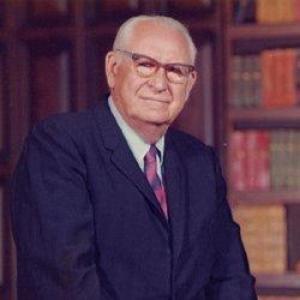
Mons. Justin Christofleau Knight of Merit of Agriculture. Gold Medalist of Society of Encouragement for National Industries. Member of Society of Scientists and Inventors of France. Foundation Member of National Society of Agriculture. Member of Association of Manufacturers and Inventors of France. |
 |
Homer Scott Swingle, Ph.D. Homer Scott Swingle is known as the father of pond management and made significant contributions to aquaculture by establishing methods for creating self-sustaining fish populations, which provided inexpensive protein sources during challenging times. He also played a key role in expanding the Auburn University Fisheries Department into a leading institution for fishery research and education. |
 |
George William Bennett, Ph.D. |
 |
Monisha Banerjee, Ph.D. Dr. Banerjee has eight years of experience restoring and reclaiming disturbed desert lands. Her work focuses on mine waste reclamation and riparian restoration. She has experience in a broad range of vegetation, physical and hydraulic soil characterization, and microbial analyses and survey techniques. She has written literature reviews covering a wide range of topics including soil clogging of infiltration basins for wastewater recharge, saline groundwater mitigation and reclamation in riparian environments, and bacterial diversity of... |
 |
Robert Pemell Robert Pemell was an early English medical author known for writing in his native language, contributing significantly to pediatric medicine. His notable works include "De morbis puerorum" (1653), a treatise on children's diseases, and "Tractatus de simplicium medicamentorum facultatibus" (1652), discussing medicinal substances. |
 |
Edward Irving, Ph.D. Born in the UK in 1927, Irving went on to complete his undergraduate training in geology at Cambridge. In June of 1951, he was recruited to assist British geophysicist, Keith Runcorn, whose pioneering studies of paleomagnetism provided early evidence in support of the theory of continental drift. They collected samples from the Torridonian Sandstone of Northwest Scotland for a paleomagnetic study. This work was to become the start of Irving’s PhD. Irving was also instrumental... |
 |
Albert Roy Davis, Ph.D. Albert Roy Davis, scientist, was born in Halifax, Nova Scotia. As professor of physics, he taught physics, aerodynamics and electronics, establishing the Albert Roy Davis Research Laboratory at Green Cove Springs, Florida, in 1938. He has authored over 300 general science courses adopted for grade schools, high schools and colleges in the United States and many nations of the world. Recipient of a number of honorary doctoral degrees for his scientific investigations, he is considered... |
 |
Walter C. Rawls Walter C. Rawls, Jr., scientist, lawyer, was born in Richmond, Virginia. His sociological and scientific investigations have taken him to many countries of the world as a consultant to governments and world organizations. He is acknowledged in national and international directories and is a member of the American Association for the Advancement of Science and the New York Academy of Sciences. For the past six years he has actively worked with the Albert Roy Davis... |
 |
John Havelock Fidler, Ph.D. J. Havelock Fidler read Zoology and Botany at Cambridge before studying Agricultural Entomology for hist doctorate at Reading University. He has spent over thirty years in agricultural research and became interested in dowsing in 970. Since then he has devised a number of quantitative methods in relation to dowsing and has published several articles on the subject in specialist journals. |
 |
Georgius Agricola GEORGIUS AGRICOLA was born at Glauchau, in Saxony, on March 24th, 1494, and therefore entered the world when it was still upon the threshold of the Renaissance; Gutenberg’s first book had been printed but forty years before; the Humanists had but begun that stimulating criticism which awoke the Reformation; Erasmus, of Rotterdam, who was subsequently to become Agricola’s friend and patron, was just completing his student days. The Reformation itself was yet to come, but... |
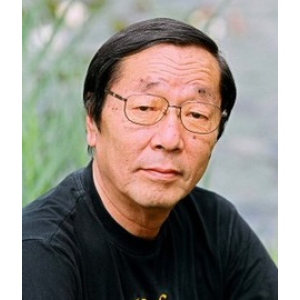 |
Masaru Emoto, Ph.D. . |
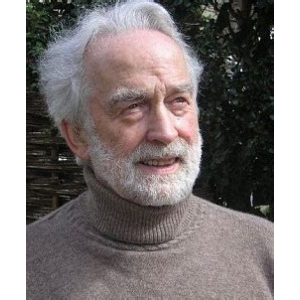 |
Alick Bartholomew Alick Bartholomew (1930-2015) studied geology and geography at the University of Cambridge and University of Chicago. He was part of the editorial team that in 1962 published Rachel Carson’s Silent Spring. In 1971 he founded the Turnstone Press, publisher of Jonathan Livingston Seagull, with a vision to reconcile science with a spiritual view of the world. In 1984 he started Gateway Books in Bath, England, continuing the Turnstone vision as well as introducing scientific paradigms,... |
 |
Carl Munck Carl Munck is known for coining the term "archaeocryptography," which involves decoding ancient monuments by finding mathematical patterns in their design and placement. His theories suggest that megalithic structures, like the pyramids, were constructed using a numerological system to encode geographical coordinates. |
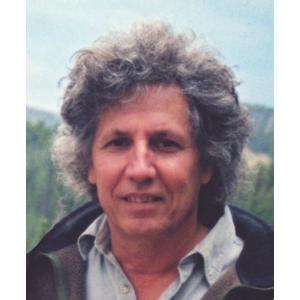 |
James DeMeo, Ph.D. James DeMeo, Ph.D., is a research scientist and former university professor, now Director of the Orgone Biophysical Research Lab, which he founded in 1978. His work and research is interdisciplinary, from cross-cultural, historical studies on the effects of drought and deserts on the origins of warfare and social violence, into laboratory experiments on cosmic cycles and life-energy subjects, and extensive confirming research on Wilhelm Reich's sex-economic and orgone biophysical findings. He has published over 100... |
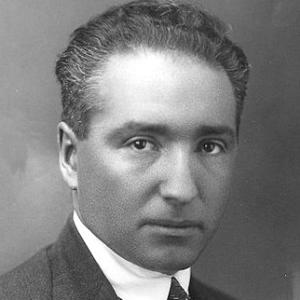 |
Wilhelm Reich Wilhelm Reich was born on March 24, 1897 in Galicia, in the easternmost part of the Austro-Hungarian Empire, now Ukraine. He grew up in the Bukovina on a large farm operated by his father. His first language was German, and until 1938 he was an Austrian citizen. According to The Bibliography of Orgonomy–prepared at Orgonon in 1953 under Reich’s supervision–his “interest in biology and natural science was stimulated early by the life on the farm, close... |
 |
Robert Louis Dressler, Ph.D. Robert Louis Dressler was born on June 2, 1927, and raised during the Great Depression in rural Taney County, Missouri. Taney County is in the Ozark Mountains, a fiercely independent but poor people. His father, Mryl, was an electrician who farmed 30 acres of rocky ground to put food on the table. While cutting wood in 1937, Myrl’s electric saw kicked back and cut his arm, and he died four days later of a pulmonary... |
 |
Tony Rinaudo In his seventeen years in Niger, missionary agronomist Tony Rinaudo discovered a simple method of regreening land without planting a single tree. The technique he pioneered--together with local farmers--came to be known as Farmer Managed Natural Regeneration, or FMNR. It has since reduced our carbon footprint, and transformed millions of lives and livelihoods. For his influential contributions, Tony has received the Right Livelihood Award and was appointed as a Member (AM) of the Order... |
 |
Masanobu Fukuoka MASANOBU FUKUOKA (1913-2008) was a farmer and philosopher who was born and raised on the Japanese island of Shikoku. In 1975 he wrote The One-Straw Revolution, a best-selling book that described his life's journey, his philosophy, and farming techniques. This book has been translated into more than twenty-five languages and has helped make Fukuoka a leader in the worldwide sustainable agriculture movement He continued farming until shortly before his death in 2008 at the age... |
 |
Neal Spackman My work is to bring life back to degraded places on earth, through innovative nature-based solutions that integrate environmental restoration with economic regeneration, thus empowering individuals, communities, and businesses to harmonize with nature and foster lasting ecological balance. |
 |
Andrew Millison Andrew is a Senior Instructor II in the Department of Horticulture at Oregon State University (OSU) where he founded OSU Permaculture Design in 2009. Collaborating with experts at OSU, Andrew developed an online permaculture education program with niche offerings that has evolved into a worldwide program that has served thousands of students throughout the planet. Prior to teaching at Oregon State University, Andrew taught at Prescott College in Prescott, Arizona. |